By: Sarah DaVanzo, Chief Innovation Officer & Innovation Futurist at Porter Novelli
I was standing in Miami, surrounded by the usual Art Basel alchemy of glossy collectors’ brand activations pretending not to be brand activations. The psychedelia and synesthesia generating enough dopamine to power Wynwood for a week, when Beeple’s “Regular Animals” hit me like a surrealist epiphany.
It wasn’t subtle. A pack of robotic dogs. Hyperreal faces. Chest-mounted cameras. The gag: they “process what they see” and pooped out prints like an absurdist content factory. A perfect example of art imitating life.
By the time CES 2026 rolled around, “Regular Animals” didn’t feel like art so much as a prophecy.
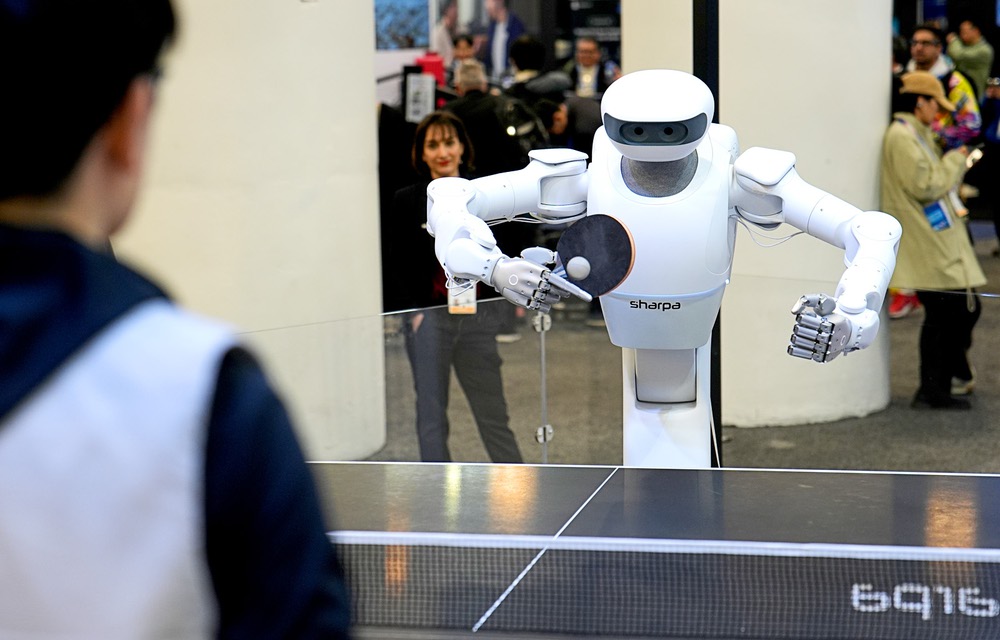
CES 2026 didn’t unveil a shiny future; it confirmed a quieter shift. AI is no longer just software you open. It’s becoming a presence that moves through your life, senses you back, and produces artifacts – summaries, recommendations, “insights” on demand.
For communications leaders, that’s not a tech headline. It’s a worldview change.
Because when AI becomes ambient, embodied, and personalized, communications stops being messaging and becomes systems design. Communications has evolved into the art and science of designing multi-modal, trans-media narratives that build trust, voice, perception and proof.
Beeple called them Regular Animals. That’s the punchline. The future arrives wearing the costume of “normal.”
Pack is the Platform, and Your Brand is Living Inside It
“Regular Animals” isn’t one object. It’s a system. Meaning comes from the coordinated herd behavior of the dogs, not a single heroic sculpture. That’s CES 2026 in a sentence.
AI is becoming a mesh layer across everything: appliances, wearables, cars, homes, and enterprise tools. The Internet of Things (IoT) pack gets bigger. It gets tighter and closer. It learns your routines, then starts to anticipate them. You don’t “use” it so much as you live inside it.
Here’s the comms implication: your audience won’t meet your brand in one place, not even on one platform. They will meet your brand through intermediaries who deliver brand messages, such as AI assistants, copilots, chatbots, shopping agents, and synthetic audiences. Possibly even through an AI-powered dog robotic pet.
So the strategic question for a CCO isn’t just “What’s our story?” It’s: what does the pack (i.e., the Operating Ecosystem, and the disparate breadcrumbs of messages peppering lives on multiple devices) say our story is?
AI Got a Body, and Reputation Got Physical
Beeple’s dogs aren’t screens. They are bodies with cameras and a kind of theatrical troupe. They aren’t trying to be pets. They’re trying to be companions.
CES 2026 brought that same energy. Physical AI everywhere, mostly not humanoids, but purpose-built systems that do one job well, safely, continuously. When AI gets a body, brand experience becomes behavioral.
Your reputation will increasingly be shaped by what products and systems do in the real world, not what you claim they do. This means innovation is communication.
In this era, a “minor” failure becomes a viral moral story: safety, privacy, bias, creepiness, harm. That means comms teams cannot stay at the surface. They have to understand model behavior, edge cases, consent, and data flows well enough to tell the truth with precision.
Face as Interface, and Voice as Comms Mandate
What made “Regular Animals” uncomfortably intimate were the faces, the way the dogs wore celebrity visages like masks you couldn’t look away from. It’s satire, but it’s also a warning. We experience reality (and brands) through personalities, platforms, and recommendation engines.
CES pushes that mediation deeper. Wearables are becoming memory prosthetics. Glasses are inching toward mainstream. “Life capture” is being sold as convenience. For comms leaders, this creates a new operational requirement: voice governance.
If customers, employees, and journalists increasingly interact with AI intermediaries, your brand voice (literally!) becomes something machines will simulate, remix, and deliver.
Who is allowed to speak as the company? In what contexts? What happens when an executive is deepfaked, or a chatbot invents policy with confidence? Communicators need a style guide for speaking.
Chest Cameras are AI Search, while GEO Feeds the Dogs
In “Regular Animals,” the chest cameras are the point. The dogs look at the world, captures the world, then the world gets turned into output: processed, reinterpreted, printed, and pooped.
That is AI search.
Generative search and LLM assistants are chest cameras pointed at the internet, your brand, and your category. They ingest what they can “see,” then excrete the answer. For the public, it feels like magic. For comms leaders, it is an upstream problem with downstream reputational consequences.
This is where the new discipline lands: GEO, generative (AI) engine optimization.
Not manipulation. Not gaming the AI search system. Think of GEO as making your truth easy to retrieve and hard to distort. If you don’t like what the dogs print, change what they are allowed to see by publishing clearer, more authoritative inputs.
Ethical GEO tactics for communications look like this:
- Create a “source of truth” hub for high-risk topics: safety, privacy, sustainability, pricing, clinical claims, supply chain.
- Write for retrieval: crisp FAQs, definitions, timelines, executive bios, policies, and product pages that match how people ask questions.
- Make content citable and consistent across newsroom, IR, support docs, careers pages, app listings, Wikipedia and partner materials.
- Earn third-party (earned media) validation that models trust: reputable press, standards bodies, analysts, and transparent disclosures.
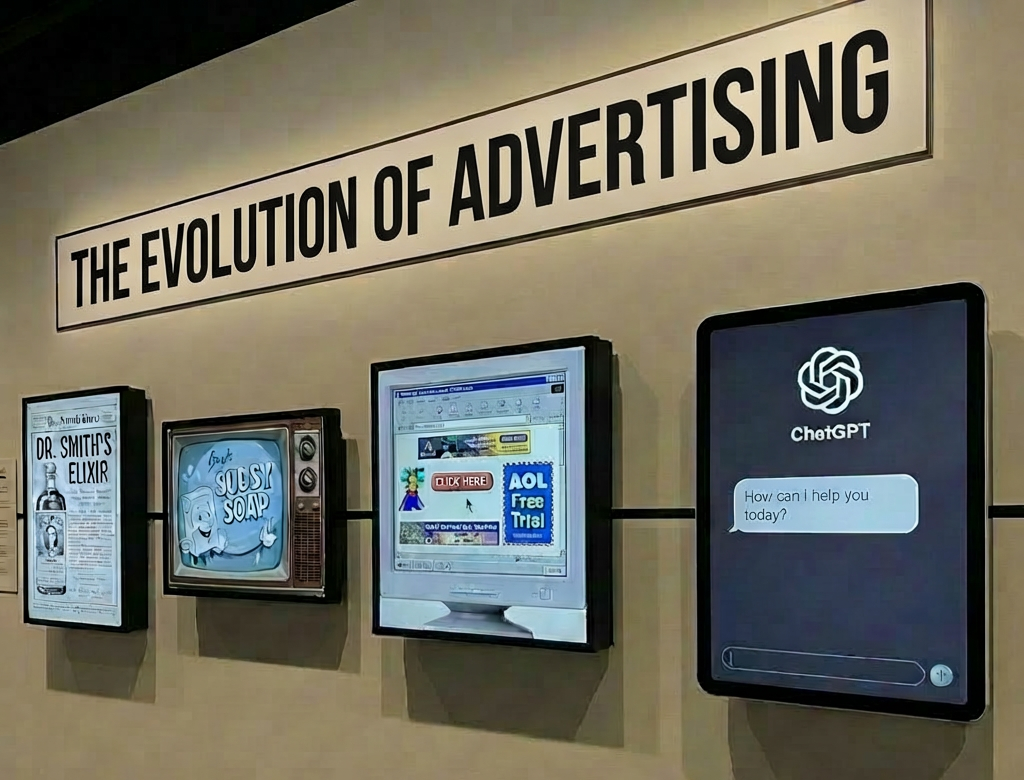
The old playbook was earned media. The new layer is earned inclusion in the answers.
Trust as Behaviors, Not Messages
“Regular Animals” makes the social commentary that AI borrows from prior art, remixing and mashing up IP, like Andy Wahol’s art. This raises questions of authenticity and ergo trust.
CES 2026 reinforced that we are in the middle of the sensor decade: devices that listen, scan, monitor, and optimize…from data. The tradeoff is data for personalization. Brand communicators crave data for precision messaging.
Trust cannot be sloganized in this environment. It has to be designed, and behavior needs to be trustworthy. For comms professionals this means consent that feels clear, explanations that feel human, defaults that respect privacy, receipts that prove what you did and didn’t do.
Regular is the New Uncanny
The most unsettling part of “Regular Animals” isn’t the robotics. It’s the title. Regular.
That’s how the future arrives: as a feature update. As a default. As a convenience you didn’t ask for but now can’t imagine living without. The next reputational crisis won’t arrive with smoke. It will arrive quietly, like an AI summary that gets policy wrong, a wearable that captures something sensitive, a bot that invents an answer, a deepfake that outruns verification.
So what does Beeple’s metaphor tell a CCO?
That the next era isn’t about machines becoming human, but about brands becoming machine-readable. A pack forms around your stakeholders. It learns them. It outputs them. It prints your reputation as a clean little answer.
And what does CES 2026 remind a CCO?
In the age of AI everywhere, your reputation won’t be what you say.
It will be what the “pack” of connected things spits out.