By Jody Biagini, Senior Vice President, Porter Novelli
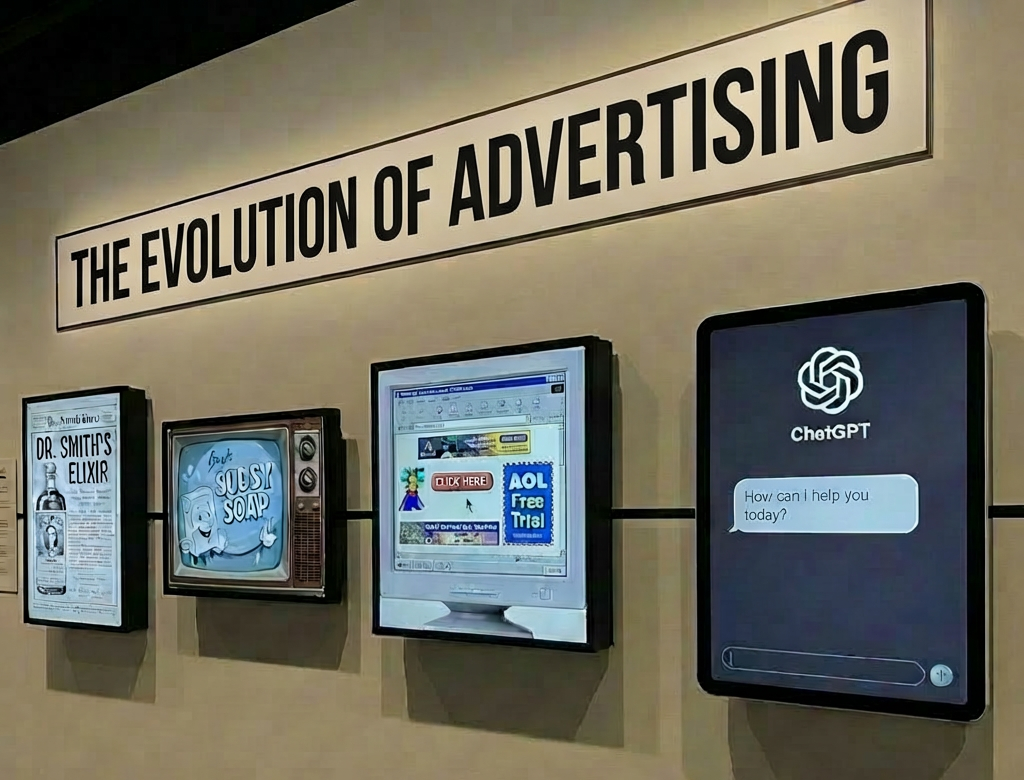
Recently, we published a comprehensive POV predicting that ads would come to ChatGPT and outlined what that shift might mean for brands and the future of performance marketing. Now, OpenAI made it official: they’re testing ads in the coming weeks.
The writing was on the wall that this was coming, but it was striking how closely it aligned with our original playbook. OpenAI has validated our core predictions about format, trust, measurement, and strategy.
Here’s what OpenAI confirmed, what surprised us, and what you need to do right now to prepare.
We Got It Right: Four Core Predictions That Just Became Reality
- Sponsored Answers, Not Banners
We predicted ads would appear clearly labeled, utility-first modules separate from organic answers. OpenAI’s announcement confirms exactly that: ads will appear in labeled boxes directly below ChatGPT responses. The format is conversational and contextual, not intrusive. - Category Exclusions and Brand Safety First
We flagged that sensitive categories, such as healthcare, finance, and politics, would be excluded. OpenAI’s inaugural testing explicitly excludes health, mental health, and politics. Brands in restricted categories need to prepare for later phases or alternative strategies.
- Conversational Intent Over Behavioral Data
We argued that ChatGPT ads would match on conversation topics, not third-party audiences or cookies. OpenAI confirmed that ads will be matched based on current conversation context, not individual user profiles, keyword bidding, or data sold to advertisers.
- Data Privacy as a Differentiator
We predicted OpenAI would need to keep privacy at the forefront as this would be a core concern from users. They announced that users will control personalization and can clear ad data at any time.
What surprised us:
- The buying model
We predicted that OpenAI would follow Google’s playbook and use auction-based, CPC (cost per click) bidding, however it is reported that they will actually use a CPM / impression based model, similar to display advertising, charging a premium $60 CPM. This is a core differentiator and contrast to Google and other search-style platforms, showcasing that it expects advertisers to treat ChatGPT like premium owned-media inventory rather than incremental search volume. For brands that would be considering OpenAI as an alternative or supplement to standard search, they will not have similar buying standards or results to compare to.
- The speed of the rollout
With ads starting “in the coming weeks” and not months, it suggests OpenAI has both confidence in their playbook and competitive urgency to establish themselves as the leader in conversational advertising. The beta advertisers are not yet known, however conversations and negotiations with those companies must have been in the works for a while. Early reports suggest pilot eligibility requires a minimum ad budget commitment between $200,000 and $1 million, though exact thresholds remain unclear.
- The openness to receive feedback and adapt
The interface will allow users to quickly identify why you are seeing a given ad, dismiss it, and then provide direct feedback on your experience. This design signals that the ad experience will evolve based on direct user feedback, not just engagement metrics.
- Tiering Ad Model
Their ad model will appear on free and Go tiers, however their Plus, Pro, and Enterprise will currently remain ad-free.
What You Need to Do Right Now
We were right about the inevitable shift to conversational ads. OpenAI’s announcement validates our playbook on format, trust, targeting, and strategy. But the real work starts now.
Here are some action items to get you started if AI ads are in your future (hint, they probably are):
- Audit category eligibility: Is your brand in health, finance, or politics? If so, prepare for later phases. If not, you’re cleared for early testing.
- Inventory your data quality: Product feeds, pricing, inventory, reviews, FAQs. OpenAI will match ads on conversation context and your data needs to be current and structured.
- Map conversational intent: Stop thinking in keywords. What questions do your customers ask about your product or service? Build a conversational intent map and use it to guide messaging and data enrichment.
- Prepare brand safety protocols: Without third-party verification initially, build your own allow/block lists, negative keywords (conversational topics to avoid), and contextual exclusions.
- Design ads that answer user intent: Draft 3–5 conversational answer formats.
- Apply for early access: When OpenAI opens the advertiser signup, be first in line. Early testers will gain insights that inform future strategies.
- Identify pilot use cases and develop a phased budget plan: How much of your performance budget migrates to ChatGPT in future quarters? Which products, services, or customer segments will you test first?
The is an opportunity. Brands that prepare their data, map their conversational intents, and move early will shape how ChatGPT and other AI-based advertising models evolve.
We’re actively monitoring the rollout as advertising begins. We’ll share learnings, tactical updates, and refined recommendations as the landscape evolves.