By: Lauren Munsey, Account Manager, Porter Novelli
Energized. Buzzing. Excited. Reinvigorated. Those are some of the buzzwords you may typically hear from attendee reflections of a wrapped, session-filled event.
Rage however, may seem like an odd choice, but it’s not what you may think.
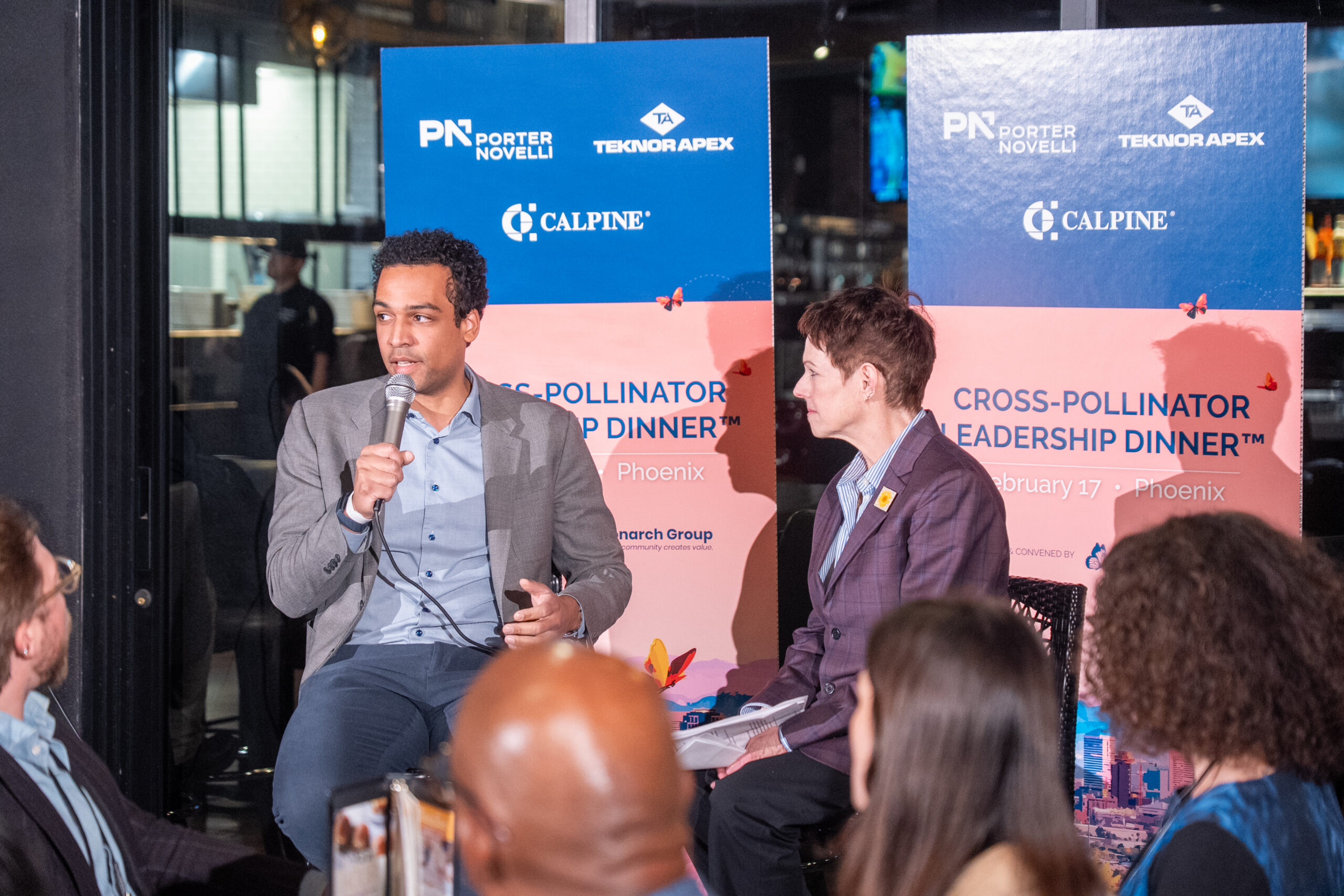
Following the first full-day of GreenBiz’26, sustainability leaders from across the spectrum gathered for the Cross-Pollinator Leadership Dinner, hosted by Porter Novelli, Teknor Apex, and Calpine, for an evening of candid dialogue on shaping a more adaptive, equitable, and climate-aligned future.
Kicking off a pre-dinner reception, the Thirsty Lion patio quickly heard a cacophony of sounds – from the banging of those engraving their personalized bracelets, to the typewriter clicking away on custom sustainability-centered poems. Amongst all this were conversations that filled the white space between “How are you?” and reflections of the GreenBiz keynote debate: “The Role of the CSO.”
The highlight of the event was the fireside chat between Porter Novelli’s Sandy Skees and Justin Worland, Senior Correspondent at TIME and one of the most respected voices in climate journalism. The conversation spanned the nexus of climate, policy, and society.
Here are some fireside takeaways that continued into dinner table discussions:
AI is changing the way we navigate climate resilience – for good and for bad
AI technology is being used in a myriad of ways to support climate and sustainability efforts through improved forecasting, data analysis, ecosystem monitoring, and dozens of other infrastructure and optimization pathways to support climate resilience. However, AI data centers, especially those in rural communities, are increasingly tapping into and stressing both freshwater resources and energy resources. This conversation about AI and community impact is just breaking the surface, and many sustainability leaders see this as a key, nuanced issue heading into the AI frontier of 2026.
Even during times of quiet, continue to make moves in silence to maintain progress and credibility
A throughline topic across much of the discussions centered around the dampening of both sustainability program momentum and communication about progress felt in the last few years. While we’ve seen a spotlight shift away from sustainability and in some cases a clear rollback of climate-conscious efforts, the leaders on the frontlines of climate resilience are still centering its business and impact value with a quiet boldness. That the resolve expressed by those doing the work inside brands will set up the next chapter of what many are saying will be more visible environmental endeavors.
Righteous rage is eternal: Balance compassion and compliance in communications
This saying is often defined as a justified response to injustice; a moral signal that can drive a revolution for enduring change. We’ve seen the power of this when communities come together to put themselves between their neighbors and the forces aimed at them with a sense of righteousness. It’s not rooted in anger, but compassion; and it looks like this same resolve is driving the sustainability landscape as its leaders, advocates and activists refuse to back down from what they’ve built and committed to achieving.
So, what does this mean for the future of communicators on the frontlines of sustainability narratives?
Here’s a quote from GreenBiz’26 keynote speaker Ami Vitale, a National Geographic photojournalist on resilience: “Solutions don’t appear when the path is clear; they emerge when the odds are stacked against us. It’s in those moments when everything feels impossible, that the human spirit shows its greatest strength.”